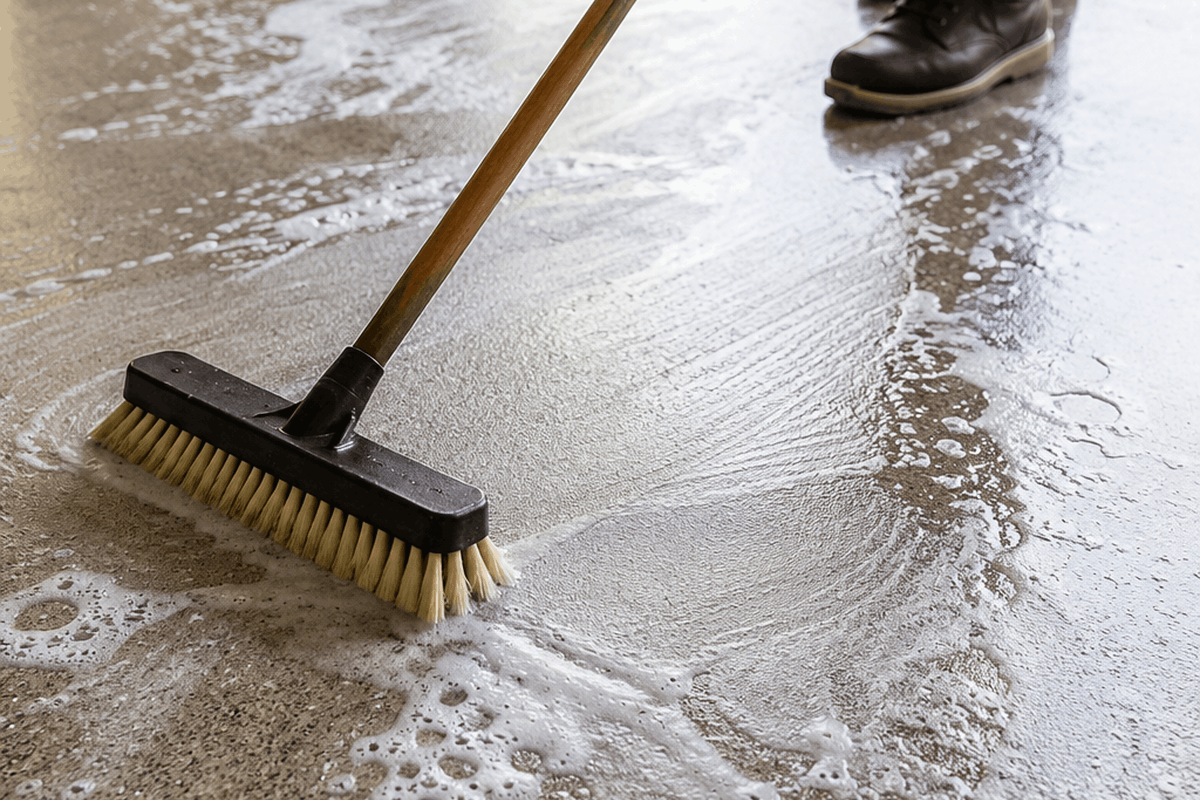
Your garage floor goes through more wear and tear than almost any other surface around your home. From muddy shoes and leaking vehicles to DIY projects and heavy equipment, it’s constantly exposed to dirt, grease, dust, and stains. Over time, all that buildup can make even a well-organized garage look neglected.
If you’re wondering how to clean a garage floor, the good news is that you don’t need professional equipment to get great results. With the right cleaning method and a few basic supplies, you can remove everyday grime, tackle stubborn stains, and help protect your flooring from unnecessary wear. The key is understanding what type of garage floor you have before you begin, since different materials require slightly different care.
Whether your garage has unfinished concrete, a protective epoxy coating, painted concrete, rubber flooring, or interlocking garage tiles, this guide explains how to clean a garage floor safely and effectively. I’ll walk you through each step, share a few practical tips I’ve found helpful over the years, and point out where your cleaning method should change based on the type of flooring.
Why Regular Garage Floor Cleaning Matters
It’s easy to think of the garage as a space that’s meant to get dirty, but regular cleaning does more than improve its appearance.
Keeping your garage floor clean can:
- Reduce dust and debris that get tracked into your home.
- Prevent oil, grease, and chemicals from becoming permanent stains.
- Make the floor safer by reducing slippery spots.
- Extend the life of protective floor coatings.
- Help you spot cracks, leaks, or moisture problems before they become bigger issues.
- Create a cleaner, more enjoyable workspace if you use your garage for hobbies or home projects.
Even spending 15 to 20 minutes sweeping every week can make deep cleaning much easier when it’s time for seasonal maintenance.
Identify Your Garage Floor Before You Start
Before you begin cleaning garage floor surfaces, take a moment to identify what type of flooring you have. While many of the basic cleaning steps are the same, some materials are more sensitive to certain cleaners, brushes, or pressure washing.
Here’s a quick guide:
| Flooring Type | How to Identify It | Cleaning Notes |
| Bare concrete | Gray, porous surface with no visible coating | Durable but absorbs stains quickly. |
| Sealed concrete | Water beads on the surface instead of soaking in | Easier to clean and more stain resistant. |
| Epoxy-coated floor | Smooth, glossy finish, often gray or decorative | Avoid abrasive brushes and harsh chemicals. |
| Painted concrete | Colored finish with a matte or satin appearance | Use gentle cleaners to prevent peeling. |
| Garage floor tiles | Interlocking plastic or PVC tiles | Dirt can collect between seams. |
| Rubber flooring | Rubber mats or rolls commonly found in home gyms | Avoid petroleum-based cleaners. |
If you’re unsure what type of floor you have, sprinkle a few drops of water on the surface. If the water quickly soaks in, it’s likely unsealed concrete. If it beads up, the floor probably has a protective coating or sealant.
Supplies You Will Need
Most homeowners already have everything needed to clean garage floor surfaces without buying specialty equipment.
Gather these supplies before you begin:
- Push broom or soft broom
- Dustpan
- Shop vacuum (optional)
- Bucket
- Warm water
- Mild dish soap or a pH-neutral floor cleaner
- Nylon scrub brush
- Microfiber mop (recommended for coated floors)
- Garden hose (if your flooring allows rinsing)
- Floor squeegee (optional)
- Baking soda or cat litter for fresh oil spills
- Concrete-safe degreaser for stubborn grease stains
- Rubber gloves
- Safety glasses if using commercial cleaners
Pro Tip: Start with the gentlest cleaner possible. Strong chemicals aren’t always more effective and can damage painted or coated garage floors.
How to Clean Garage Floor: Step-by-Step
Step 1: Empty the Garage
Move vehicles, bicycles, storage bins, gardening tools, and anything else sitting on the floor. Cleaning around large objects usually leaves dirt behind and makes it harder to scrub thoroughly.
This is also a great opportunity to reorganize shelves, donate unused items, or sweep out corners that rarely get attention.
If removing everything isn’t practical, work in sections and move items as you go.
Step 2: Sweep or Vacuum Loose Dirt
Before introducing water, remove as much loose debris as possible.
Sweep away:
- Dust
- Leaves
- Sand
- Gravel
- Grass clippings
- Sawdust
- Cobwebs
If your garage tends to collect fine dust, a shop vacuum can do a better job than a broom alone.
Starting with a clean surface also prevents dirt from turning into muddy residue once you begin washing.
Step 3: Spot-Treat Stains First
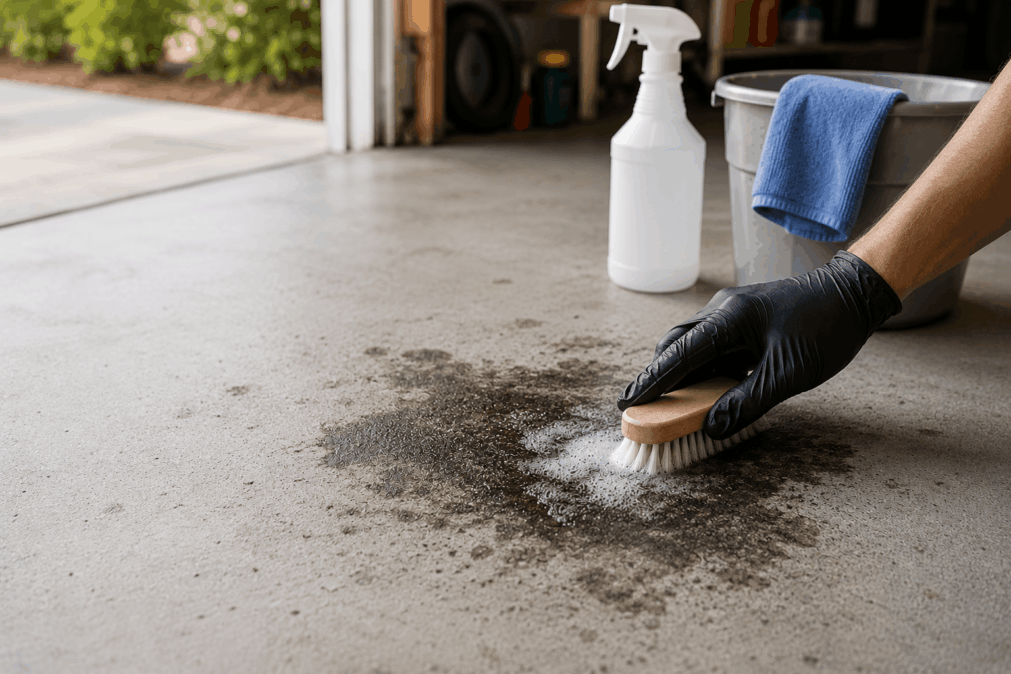
One mistake many homeowners make is washing the entire floor before dealing with stains. Unfortunately, water alone won’t remove oil, grease, rust, or paint.
Instead, inspect the floor and treat any problem areas first.
For fresh oil spills:
- Cover the spill with baking soda or cat litter.
- Leave it for 30 minutes to several hours so it can absorb the oil.
- Sweep it away.
- Apply a suitable degreaser if needed before washing the entire floor.
For dried stains, don’t worry if they don’t disappear immediately. We’ll cover the best removal methods for different types of stains later in this guide.
Floor Type Note: If you have an epoxy-coated or painted garage floor, always test any stain remover on a small, hidden area before applying it across a larger section.
Step 4: Choose the Right Cleaning Solution
The best way to clean garage floor surfaces depends on the material and how dirty the floor is. In most cases, a mild cleaner is all you need for routine maintenance, while tougher stains may require a specialized product.
Use this guide to choose the safest option:
| Garage Floor Type | Recommended Cleaner | Avoid |
| Bare concrete | pH-neutral concrete cleaner or mild dish soap | Strong acids unless specifically recommended for concrete |
| Sealed concrete | pH-neutral cleaner | Abrasive powders that can dull the finish |
| Epoxy-coated floor | pH-neutral cleaner or diluted ammonia solution* | Vinegar, citrus cleaners, bleach, or abrasive scrub pads |
| Painted concrete | Mild dish soap | Harsh solvents that may lift the paint |
| Garage floor tiles | Mild detergent | Oil-based cleaners that leave residue |
| Rubber flooring | Rubber-safe or pH-neutral cleaner | Petroleum-based solvents |
*Always follow the flooring manufacturer’s cleaning recommendations if available.
If you’re using a commercial cleaner for the first time, test it on a small, hidden section of the floor before cleaning the entire garage.
Step 5: Wash the Floor
Now it’s time for the main cleaning.
Instead of pouring cleaner over the entire floor at once, work in manageable sections. This prevents the solution from drying before you’ve had a chance to scrub.
Here’s the process I usually follow:
- Mix the cleaner according to the label directions.
- Apply it to one section of the floor.
- Let it sit for a minute or two if the product recommends it.
- Scrub the surface using the cleaning tool that’s appropriate for your flooring.
- Move to the next section and repeat.
Working in smaller areas gives you better results and helps you avoid missing spots.
Step 6: Rinse (If Your Flooring Allows)
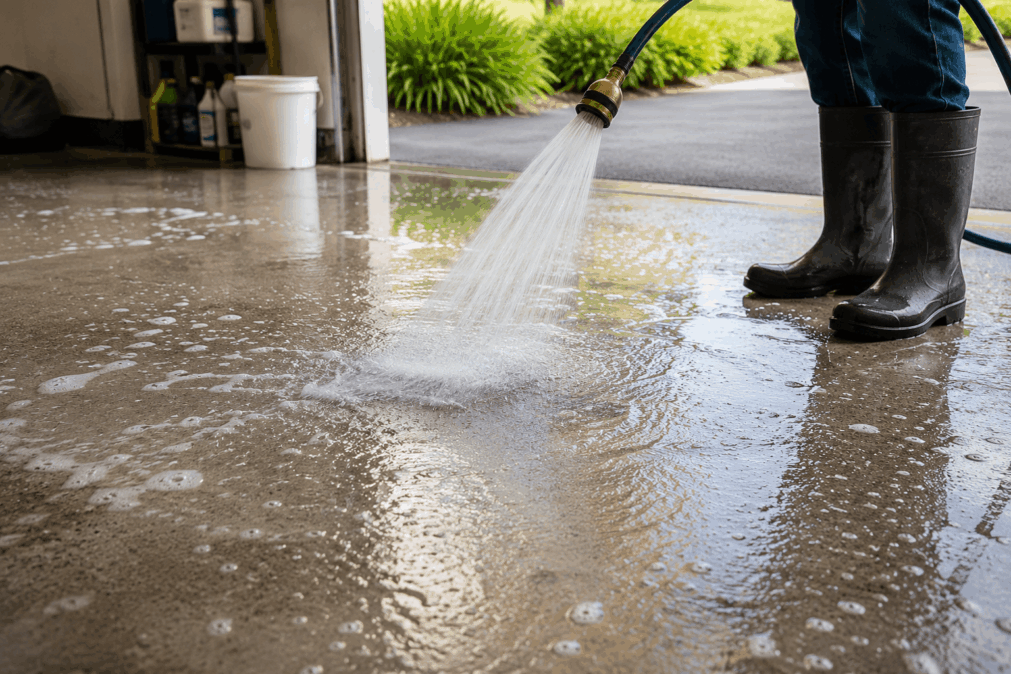
After scrubbing, remove any remaining cleaner before it dries on the surface.
If your garage floor can safely handle water:
- Rinse with a garden hose.
- Start at the back of the garage and work toward the garage door.
- Use a floor squeegee to push excess water outside.
For epoxy, painted floors, rubber flooring, or garages where large amounts of water aren’t practical, simply wipe away the cleaner with clean water and a microfiber mop.
Removing soap residue is just as important as removing dirt. Leftover cleaner can attract dust and leave the floor looking dull.
Should You Use a Pressure Washer?
Many homeowners wonder whether a pressure washer is necessary. The answer depends on both the flooring material and the amount of dirt you’re dealing with.
A pressure washer is helpful when:
- Mud has built up over several months.
- You’re cleaning a large garage.
- Dirt has become embedded in textured concrete.
- You’re preparing bare concrete for sealing.
However, it isn’t always the best choice.
Avoid or use extra caution with pressure washers on:
- Epoxy-coated floors
- Painted concrete
- Loose or damaged coatings
- Older concrete with cracks
- Rubber flooring
- Garage tiles unless the manufacturer recommends it
If you decide to use one, start with the lowest pressure setting and keep the spray nozzle moving instead of concentrating on one spot.
For routine maintenance, a scrub brush and mild cleaner are often all you need.
Use the Right Cleaning Tool
Different garage floors respond better to different cleaning tools.
| Flooring Type | Best Cleaning Tool |
| Bare concrete | Stiff nylon deck brush |
| Sealed concrete | Nylon brush or microfiber mop |
| Epoxy coating | Soft-bristle brush or microfiber mop |
| Painted floor | Soft mop or microfiber mop |
| Garage tiles | Soft brush or mop |
| Rubber flooring | Microfiber mop |
Step 7: Allow the Floor to Dry Completely
Before bringing vehicles or storage items back into the garage, let the floor dry thoroughly.
Open the garage door to improve airflow. On humid days, placing a fan near the entrance can speed up drying and reduce the chance of moisture becoming trapped under mats or storage bins.
Once the floor is dry, take a final look around. This is the perfect time to see if any stains need a second treatment before the garage is put back together.
How to Handle Different Garage Floor Types
Although the cleaning process is generally the same, each flooring material benefits from a few extra precautions.
Bare Concrete
Concrete is durable but porous, meaning it absorbs liquids quickly.
To keep it looking its best:
- Clean spills as soon as possible.
- Use a concrete degreaser for oil stains.
- Consider applying a concrete sealer every few years to reduce future staining.
Sealed Concrete
A sealed floor is much easier to maintain because liquids stay on the surface instead of soaking in.
Use a pH-neutral cleaner and avoid abrasive brushes that may gradually wear away the protective seal.
Epoxy-Coated Floors
Epoxy floors are known for their durability, but the finish can lose its shine if cleaned with harsh chemicals.
For regular maintenance:
- Sweep frequently to remove grit.
- Mop with warm water and a pH-neutral cleaner.
- Use a microfiber mop or soft brush.
- Wipe up chemical spills promptly.
Painted Concrete Floors
Painted floors require a little more care than bare concrete.
Avoid aggressive scrubbing, strong solvents, and high-pressure washing. Gentle cleaning helps extend the life of the paint while keeping the surface looking fresh.
Garage Floor Tiles
Interlocking tiles hide dirt surprisingly well.
Every few months:
- Sweep between the seams.
- Mop normally.
- If needed, lift individual tiles to remove trapped dirt underneath before reinstalling them.
Rubber Flooring
Rubber floors are popular in home gyms and workshops because they’re comfortable underfoot and easy to maintain.
Clean them with warm water and a mild cleaner, then dry the surface with a clean microfiber cloth to prevent water spots.
Avoid petroleum-based cleaners, which can gradually break down the rubber.
How to Remove Common Garage Floor Stains
Even after you’ve washed the floor, some stains may still be visible. The best way to remove them depends on what’s causing the stain and the type of flooring you have
Oil and Grease Stains
Oil stains are one of the most common garage floor problems. Fresh spills are much easier to remove than stains that have been sitting for weeks or months.
Here’s a method that has worked well for me:
- Blot up any excess oil with paper towels or an absorbent cloth.
- Cover the stain with baking soda or cat litter.
- Let it sit for several hours or overnight.
- Sweep away the absorbent material.
- Apply a degreaser if needed.
- Scrub gently with the appropriate brush.
- Rinse or wipe clean.
Floor Type Notes
- Concrete: A concrete degreaser usually provides the best results.
- Epoxy or painted floors: Use a pH-neutral degreaser approved for coated surfaces.
- Rubber flooring: Clean with a mild detergent and avoid petroleum-based products.
- Garage tiles: Lift individual tiles if oil has seeped underneath.
Rust Stains
Rust stains often develop under bicycles, metal shelving, toolboxes, or lawn equipment.
To remove them:
- Apply a concrete-safe or floor-safe rust remover.
- Allow it to sit according to the manufacturer’s instructions.
- Scrub gently with a nylon brush.
- Rinse or wipe clean.
Floor Type Notes
If your garage has epoxy or painted flooring, avoid harsh acidic rust removers unless the manufacturer confirms they’re safe for that surface.
Tire Marks
Dark tire marks are common, especially on coated garage floors during hot weather.
To remove them:
- Wash the area with warm water and a pH-neutral cleaner.
- Scrub lightly with a soft nylon brush or microfiber mop.
- Repeat if necessary.
Avoid abrasive pads, as they can scratch coated floors while doing little to improve the results.
Paint Spills
Paint spills don’t have to become permanent if they’re cleaned promptly.
For wet paint:
- Wipe up as much as possible immediately.
- Wash the area with warm, soapy water.
For dried latex paint:
- Carefully scrape away loose paint using a plastic scraper.
- Apply a floor-safe paint remover if necessary.
Oil-based paint is usually more difficult to remove and may require a specialized solvent. Always check that the product is compatible with your flooring before using it.
Mold and Mildew
If your garage stays damp or has poor ventilation, mold and mildew may develop in corners or along the walls.
Clean the affected area with a cleaner designed to remove mold and mildew, then improve airflow by opening the garage door or using a fan while the floor dries. The U.S. Environmental Protection Agency’s guide to mold cleanup and prevention provides additional recommendations for safely dealing with mold caused by moisture.
Common Mistakes to Avoid
Even with the right supplies, a few common mistakes can make the job harder or shorten the life of your garage floor.
Try to avoid these:
- Using wire brushes that scratch coatings or concrete.
- Mixing household cleaning chemicals together.
- Letting cleaners dry on the floor before rinsing or wiping them away.
- Ignoring fresh oil spills until they become permanent stains.
- Using excessive pressure when pressure washing coated or painted floors.
- Returning vehicles or storage items before the floor is completely dry.
- Skipping regular maintenance and waiting until dirt has built up over several months.
Taking a little extra time during each cleaning session can help preserve the appearance of your garage floor for years.
Simple Maintenance Tips to Keep Your Garage Floor Cleaner
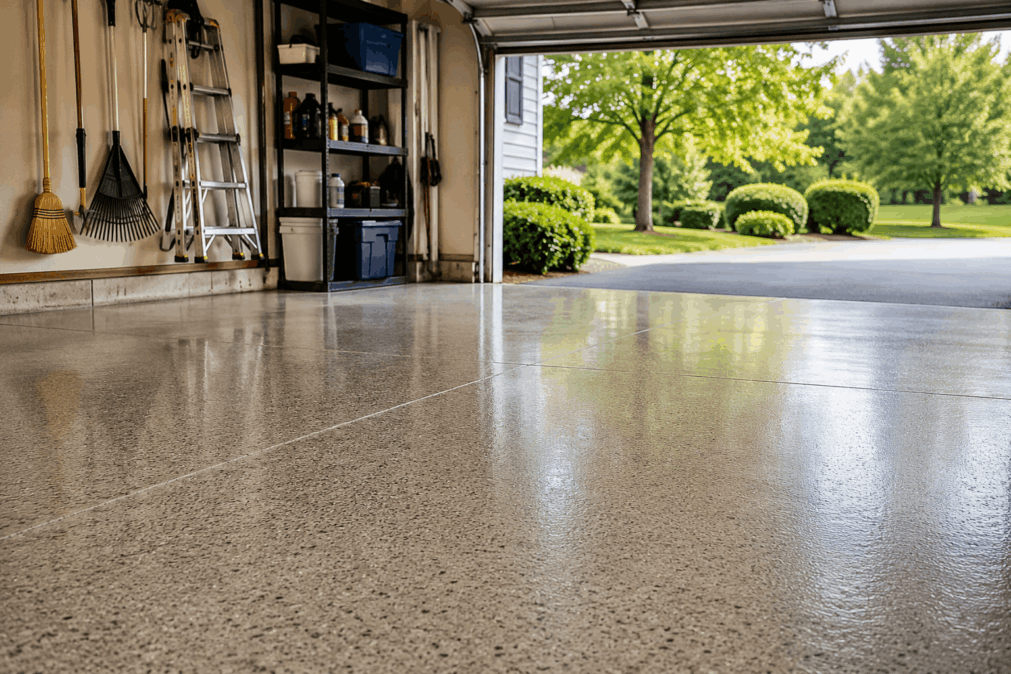
A deep cleaning every few months is important, but small habits throughout the year can make an even bigger difference.
Here’s what I try to stay consistent with:
- Sweep once a week or whenever dirt starts to build up.
- Wipe up oil, paint, or chemical spills immediately.
- Place drip trays under vehicles that leak fluids.
- Use floor mats near entry doors to reduce tracked-in dirt.
- Wash the floor every three to four months, depending on how often the garage is used.
- Reapply a concrete sealer when needed if your floor is unsealed.
- Inspect coated floors periodically for chips or peeling so small repairs can be made before they spread.
Regular maintenance takes far less time than trying to restore a heavily stained garage floor.
Final Thoughts
Learning how to clean a garage floor isn’t about using the strongest cleaner or spending an entire weekend scrubbing. In most cases, the best results come from using the right cleaning method for your flooring and staying on top of routine maintenance.
Whether your garage has bare concrete, epoxy, painted concrete, rubber flooring, or interlocking tiles, regular cleaning helps protect the surface, improves safety, and keeps the space looking organized.
A quick sweep every week, prompt attention to spills, and a thorough cleaning every few months can go a long way toward preventing permanent stains and extending the life of your garage floor.
If you’re planning to seal, repair, or upgrade your garage after cleaning, This Old House’s garage flooring and maintenance resources offer practical advice on choosing flooring materials and maintaining them over time
FAQs
What is the best way to clean garage floor surfaces?
The best approach is to sweep away loose dirt, spot-treat stains, wash the floor with a cleaner that’s appropriate for your flooring type, and allow it to dry completely. Using the correct cleaner is more important than using the strongest one.
Is it safe to pressure wash every garage floor?
No. Pressure washing is generally suitable for bare concrete but should be used cautiously on painted or epoxy-coated floors. Rubber flooring and some garage tiles may also be damaged by high-pressure water.
How often should I clean my garage floor?
Sweeping once a week and deep cleaning every three to four months is enough for most garages. If your garage doubles as a workshop or experiences heavy foot traffic, you may want to clean it more frequently.
How do I remove old oil stains from a garage floor?
Absorb as much oil as possible using baking soda or cat litter, then treat the stain with an appropriate degreaser. Older stains often require multiple treatments before they fade significantly.
Can I use bleach to clean my garage floor?
Bleach may disinfect certain surfaces, but it’s not the best choice for routine garage floor cleaning. It won’t remove oil stains effectively and may damage some coated or painted floors. A pH-neutral cleaner is usually a safer option.
How to Clean a Garage Floor Without a Pressure Washer?
You can clean a garage floor without a pressure washer by sweeping away loose dirt, treating stains first, and scrubbing the floor with warm water and a mild cleaner using a nylon brush or microfiber mop. Rinse or wipe away the cleaner, then let the floor dry completely before putting everything back.