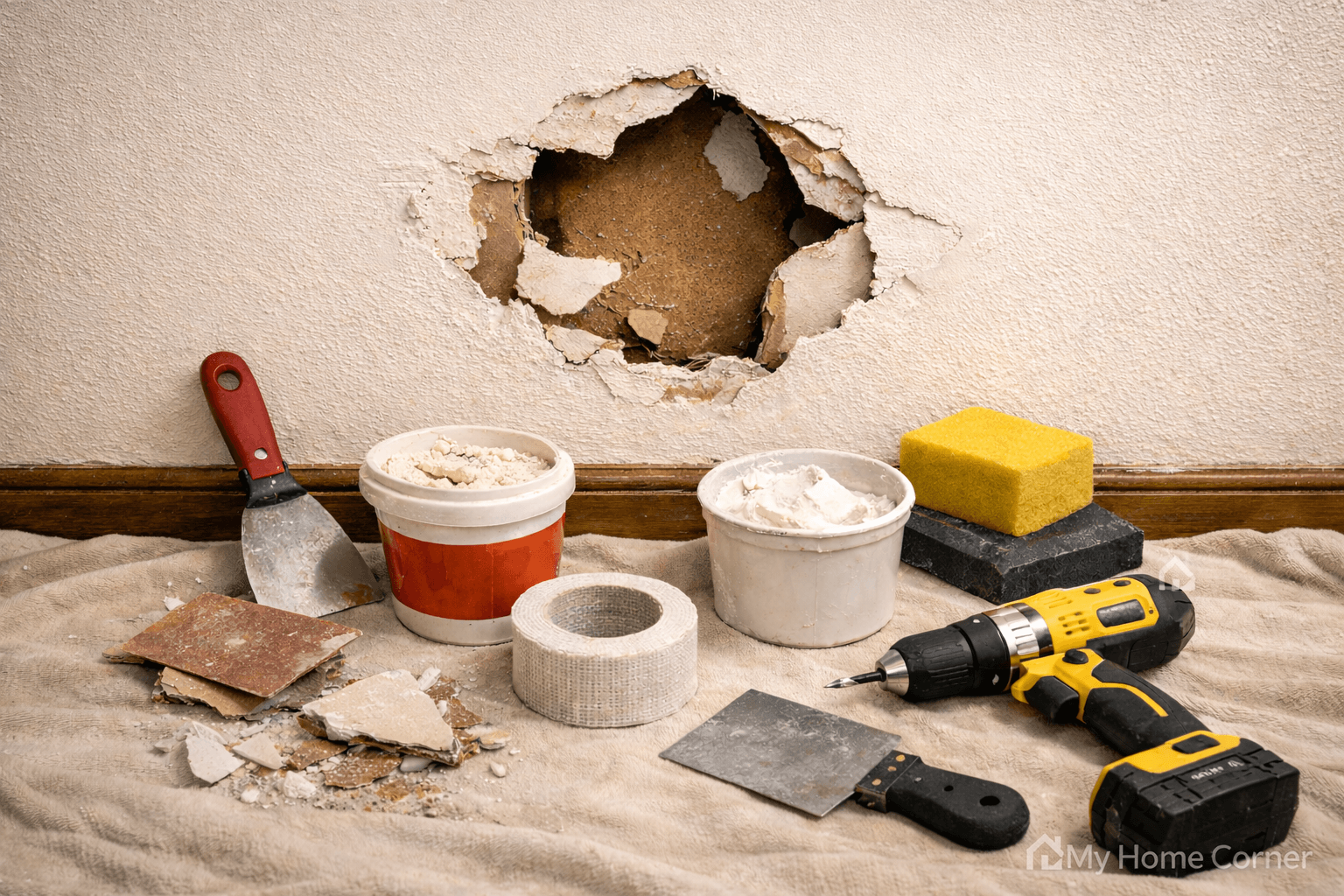
Most wall holes don’t happen all at once—they build up over time. They don’t happen in a moment of chaos. They’re usually small, quiet things—a nail pulled out years ago, a screw that didn’t hold, a door handle that met the wall one too many times. You notice them later, usually when the light hits just right or when you’re repainting a room and suddenly can’t unsee them.
Knowing how to fix a hole in the wall is one of those skills that sits somewhere between basic home care and quiet confidence. It doesn’t require talent. It requires patience, the right material, and knowing when not to overdo it.
This guide isn’t about perfect walls. It’s about repairing damage so it doesn’t draw attention, doesn’t crack later, and doesn’t announce itself as a patch.
Before You Start: Not All Wall Holes Are the Same
One common mistake is treating every wall hole the same. They aren’t.
A nail hole in drywall behaves very differently from damaged plaster. Concrete and brick require completely different materials. And a hole in a shower wall isn’t just cosmetic, it can quickly become a moisture problem if you handle it casually.
Before you start, answer two questions:
- What material is the wall made of?
- How deep and wide is the damage?
Those answers determine whether this is a quick surface repair or a job that needs a slower, more deliberate approach.
How to Fix a Hole in Drywall
Drywall is the most forgiving wall material, which is why it’s so common. Homeowners can successfully repair most drywall damage as long as the method matches the size and depth of the hole.
Some drywall holes only need a simple surface repair. Others require reinforcement or partial replacement to prevent cracking later. The key is recognizing when filler alone is enough—and when it isn’t.
For detailed, step-by-step instructions based on hole size, see our dedicated guides on fixing small wall holes and repairing large drywall holes.
How to Fix a Hole in a Plaster Wall
Plaster walls behave very differently from drywall. They’re denser, heavier, and far less forgiving of rushed repairs.
Small chips or shallow holes in plaster can usually be repaired with a plaster patch compound, pressed in firmly and allowed to set fully. Larger or repeated damage requires extra preparation—any loose material must be removed before repairs begin.
Plaster repairs succeed when they’re built in thin layers and given time to cure. Most plaster failures happen because someone tried to do too much at once.
How to Fix a Hole in a Concrete or Cement Wall
Concrete and cement walls don’t dent easily, but drilled holes and anchors are common. These surfaces require masonry-grade fillers rather than standard wall compounds.
Before applying any repair material, clean the hole thoroughly and remove dust. Lightly dampening the area helps the compound bond properly. Once filled and shaped, concrete repairs need time to cure fully before sanding or painting.
How to Fix a Hole in a Brick Wall
People usually damage brick walls when they remove fixtures or anchors. Repairing these holes is less about creating a perfectly smooth surface and more about blending with the existing mortar.
Using a mortar repair product that closely matches the surrounding joints helps the repair visually disappear once it cures.
How to Fix a Hole in a Shower Wall
You should never ignore a hole in a shower wall. Water quickly seeps behind the surface when you skip waterproof repairs.
Tile walls often need tile replacement. You can usually fix fiberglass and acrylic shower walls with waterproof repair kits made for wet environments. No matter the material, you must seal the repair properly to prevent moisture damage.
How Wall Hole Patching Works (Without Making It Obvious)
A good wall repair shouldn’t announce itself. It should quietly disappear.
Successful patches usually follow the same principles:
- Clean the area thoroughly
- Use the correct repair material
- Apply thin layers
- Feather edges wider than the damaged area
Overfilling and aggressive sanding are the most common reasons patches remain visible after painting.
Fixing a Wall Hole Quickly (When Time Matters)
There are moments when speed matters—before guests arrive, during a rental inspection, or right before painting. In those situations, it helps to know which wall holes can realistically be fixed quickly and which ones should not be rushed.
Quick repairs usually work only when:
- The hole is small and shallow (nail or pin-sized)
- The wall is drywall
- There is no moisture involved
Fast fixes usually fail when:
- The hole is deep or crumbling
- The wall is plaster, tile, or masonry
- The area is exposed to water or humidity
Fast-drying spackle can handle minor drywall holes if applied in thin layers and allowed to dry fully. Rushing larger repairs almost always leads to visible patches later. When time is limited, it’s better to accept a temporary cosmetic fix than to rush a permanent one.
Can You Fix a Wall Hole by Yourself?
In most cases, yes—but success depends more on judgment than skill.
You can usually fix a wall hole yourself if:
- The wall is drywall or solid plaster
- The hole has clean edges and isn’t actively crumbling
- You’re willing to work in thin layers and wait for drying time
DIY wall repairs most often fail because people rush, overfill holes, or skip preparation steps. Strength, tools, or experience matter far less than patience and restraint.
If you want step-by-step instructions based on hole size and wall type, see our detailed guides on fixing small wall holes and repairing large wall damage.
Making Wall Repairs Blend In
The final appearance of a repair often comes down to paint preparation. Priming repaired areas, matching the paint finish, and feathering edges properly make the difference between a visible patch and a seamless wall.
FAQs
What causes holes in walls?
Most wall holes come from nails, screws, anchors, furniture impact, or renovation work. In older homes, settling and material fatigue can also cause damage.
Can holes in walls be fixed?
Yes. With the correct materials and approach, you can successfully repair most wall holes.
Can I fix a wall hole by myself?
In most cases, yes—especially for drywall and minor plaster repairs.
Conclusion
Learning how to fix a hole in the wall isn’t about chasing perfection. It’s about choosing the right approach for the problem in front of you. Whether you deal with wall holes at home, plan to repair wall holes before painting, or try to fix wall holes without professional help, your method shapes the final result. The real goal is to restore clean, calm surfaces that blend back into your space instead of drawing attention. With the right tools and a little patience, you can fix a hole in the wall quietly and confidently and repair wall holes in a way that feels simple, practical, and within reach; no special skills required.